
The complete interview can be listened to here:
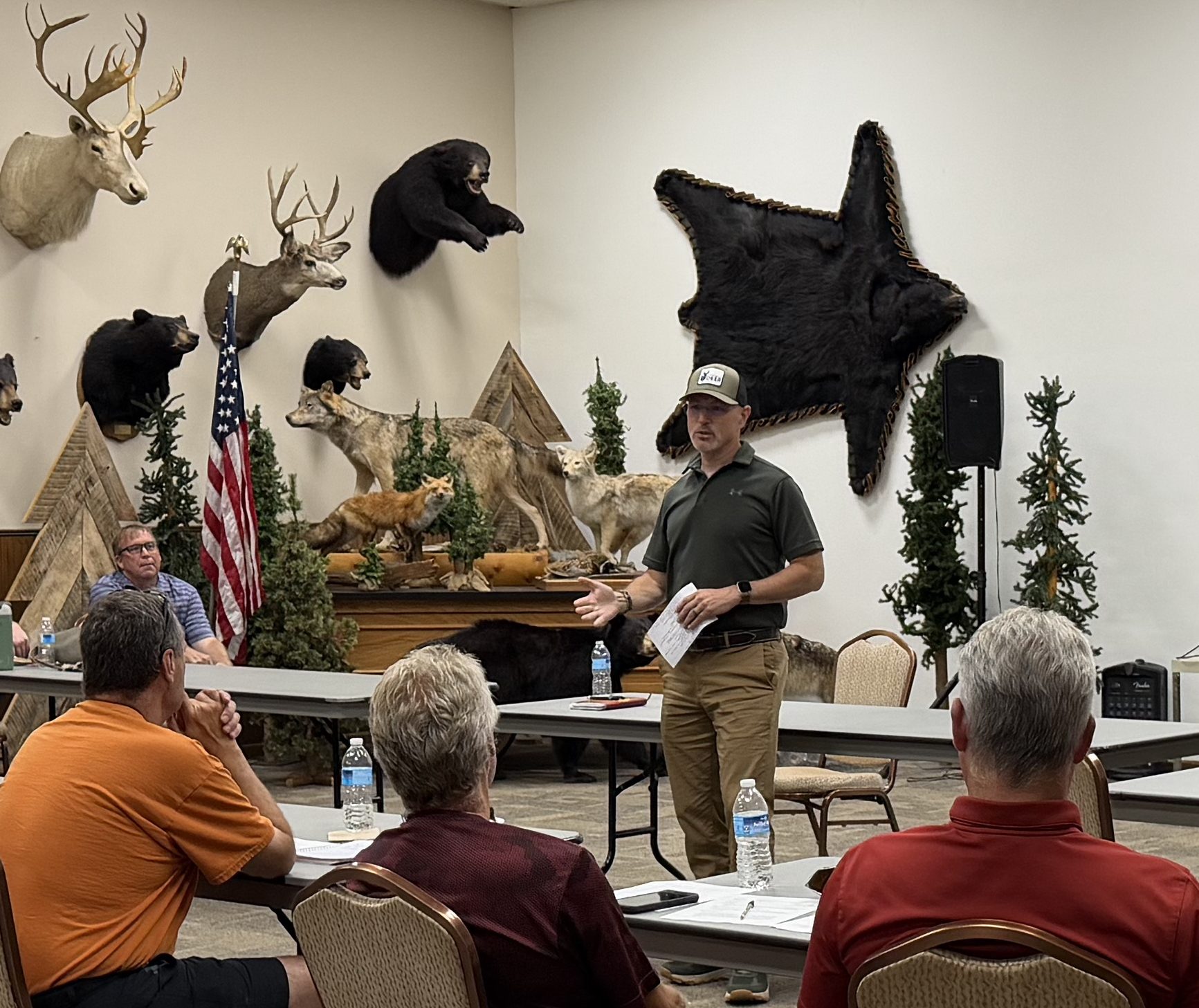
In a discussion following the 2026 Deer Rendezvous, Michigan NDA State Council President Mike Ketelaar, MI In-Sights consultant Anna Mitterling, and National Deer Association CEO Nick Pinizzotto explored the evolution of the organization, its mission, and the role deer hunters and conservationists play in shaping the future of wildlife management.
The conversation provided a candid look at the National Deer Association’s history, the transition from QDMA to NDA, the organization’s current health, and the importance of focusing on unity, science, stewardship, and joy in deer hunting and conservation.
From Volunteer to CEO
Nick Pinizzotto’s journey with the organization began as a young volunteer, not as a wildlife executive. Growing up in Pennsylvania, Nick was originally drawn to QDMA by a simple motivation that resonates with many hunters: the desire to see and pursue mature bucks. As a young hunter, he became deeply involved, joining local branches, volunteering on fundraising committees, and participating in some of the earliest Deer Steward programs.
What began as personal interest evolved into a lifelong conservation career spanning nearly three decades. Along the way, Nick worked in fisheries conservation, waterfowl management, sportsmen’s advocacy, and broader natural resource issues before eventually leading the National Deer Association.
That diverse conservation background ultimately shaped his perspective on deer. Rather than seeing deer solely as a game animal, he came to view them as one of the most influential wildlife species in North America.
Why Deer Matter Beyond Hunting
Throughout the conversation, Nick emphasized that deer are far more than a hunting resource.
Deer are arguably the most recognized and influential game species on the continent. They drive hunting participation, affect habitat health, influence agricultural production, contribute to vehicle collisions, and impact countless other wildlife species.
Because deer touch so many aspects of conservation and society, NDA believes it has a responsibility to address the full spectrum of deer-related issues.
While many members initially became involved because they enjoyed chasing mature bucks, the organization’s mission has expanded to include habitat conservation, wildlife diversity, hunter recruitment, chronic wasting disease, population management, public policy, and the broader role deer play across the landscape.
Understanding the Transition from QDMA to NDA
One of the most significant topics discussed was the transition from the Quality Deer Management Association (QDMA) to the National Deer Association (NDA). According to Nick, the transition was far less dramatic than many people perceived. The core mission of promoting healthy deer and healthy habitat never changed. What changed was the scope of the organization’s work and its ability to address larger conservation challenges.
The evolution began after years of discussion about the growing role deer play in conservation issues beyond age structure and harvest management. Eventually, a separate organization, the National Deer Alliance, was created to focus on policy and advocacy. As both organizations matured, it became increasingly clear that operating separately was inefficient.
The merger ultimately reunited those efforts under one banner.
The result was the National Deer Association, which retained the strengths of QDMA while expanding its ability to address conservation policy, hunter recruitment, habitat concerns, disease management, and broader deer-related challenges.
As Nick explained, the merger did not remove anything. Instead, it added tools, resources, and opportunities while positioning the organization for long-term sustainability.
A Science-Based Approach to Conservation
A recurring theme throughout the conversation was NDA’s commitment to science-based decision making.
Whether discussing regulations, population management, hunting methods, or habitat practices, the organization relies on peer-reviewed science rather than emotion or politics.
Nick noted that while state-level regulatory debates often become divisive, NDA remains focused on biological outcomes. The organization’s role is not to engage in every controversy but to advocate for healthy deer populations, healthy habitat, and sustainable management practices.
When issues arise that could negatively impact deer conservation, NDA works collaboratively with agencies and decision-makers to develop solutions. The emphasis is on relationships, credibility, and long-term results rather than public confrontation.
That philosophy reflects the broader organizational belief that conservation is a marathon, not a sprint.
Unity Over Division
One of the most impactful messages from the Deer Rendezvous was the concept of being “united for deer, not divisive for deer.”
In states like Michigan, where discussions about regulations can become highly polarized, Nick encouraged hunters to focus on the common ground they share.
Most hunters agree on the fundamental goals:
- Healthy deer herds
- Healthy habitat
- Sustainable hunting opportunities
- A strong hunting tradition for future generations
While disagreements on specific regulations will always exist, those differences often represent a small fraction of what sportsmen and women actually have in common.
NDA’s approach is to build bridges rather than create divisions, focusing on collaborative conservation efforts that benefit both deer and people.
The Strength of the Organization
Another topic that generated substantial discussion at the Deer Rendezvous was the health of the National Deer Association.
Nick explained that while organizational metrics such as branch numbers are often used to gauge success, NDA has shifted its focus toward quality over quantity. Rather than measuring success simply by the number of branches or events, the organization emphasizes effectiveness, sustainability, and impact.
A branch consisting of a handful of highly engaged volunteers making meaningful contributions may provide more conservation value than a much larger group that struggles to remain active.
This same philosophy extends to the organization as a whole. NDA’s leadership has prioritized financial stability, operational efficiency, and mission effectiveness over rapid expansion.
The result is an organization that Nick described as healthier and more sustainable than ever before.
Why Membership Matters
The conversation also addressed the question many people ask: Why join the National Deer Association?
For hunters, the answer is straightforward. NDA provides education, habitat resources, conservation leadership, advocacy, recruitment programs, and opportunities to engage directly in improving the future of deer and hunting.
For non-hunters, the value lies in habitat conservation and wildlife stewardship. Deer influence many aspects of the natural world, and the habitat work performed by NDA members benefits countless other species, including birds, pollinators, small mammals, predators, and game species.
Nick highlighted the organization’s habitat improvement efforts, noting that millions of acres have been enhanced through the actions of landowners applying management principles promoted by NDA. Those improvements benefit far more than deer alone.
Bringing Back the Joy
One of the most personal and powerful portions of the discussion centered on the 2026 Deer Rendezvous theme: Joy.
Nick reflected on why he became involved in deer hunting in the first place and what continues to motivate him today. For him, joy is not found in titles, recognition, or exclusive hunting opportunities. It is found in the simple experience of being outdoors, hanging a bow on a tree, watching wildlife interact with a landscape he helped improve, and feeling connected to the resource.
He described restoring an abandoned area on his Pennsylvania property and experiencing the satisfaction of watching deer utilize habitat he personally created. That moment served as a reminder that conservation is not just about outcomes but about the fulfillment that comes from participating in the process.
In a world where hunters can become consumed by regulations, social media debates, and harvest statistics, the conversation served as a reminder to reconnect with the reasons they started hunting in the first place.
Supporting the Volunteers Who Make It Possible
The discussion concluded with a message to the volunteers who power NDA at every level.
Having served as a volunteer himself, Nick acknowledged that burnout is real. Organizing events, raising funds, coordinating projects, and recruiting participants can be demanding.
His advice was simple: remember your “why.”
The most successful volunteers are those who focus on what they can give rather than what they can receive. Conservation succeeds because individuals choose to invest their time, energy, and passion into something larger than themselves.
For Nick, NDA’s success is not ultimately about national leadership or organizational structure. It is about the volunteers, branch leaders, co-op leaders, landowners, and hunters who dedicate themselves to improving deer, habitat, and hunting opportunities for future generations.
Looking Forward
The conversation painted a clear picture of where the National Deer Association stands today.
The organization remains committed to its roots in deer management while embracing a broader conservation mission. It continues to prioritize science, collaboration, habitat stewardship, hunter recruitment, and education while working to unite rather than divide the deer hunting community. Most importantly, it seeks to ensure that the joy of deer hunting, wildlife conservation, and land stewardship remains available for generations to come.
As the discussion made clear, the future of deer conservation will not be built on conflict or slogans. It will be built on relationships, science, stewardship, and the shared passion of people who care deeply about deer and the landscapes they inhabit.
This article was generated via Copilot, edited by Anna, using the transcript from the interview, and reviewed by those interviewed. The complete file is available to listen to at the top of this article.
Leave a Reply