
This is the first in a four-part series looking at Wildlife Management in Michigan from the perspectives of a Natural Resources Commissioner, Conservation Officer, and statewide Biologist. The last part of the series will look at how these positions overlap, work together and outline the regulatory aspects of deer management.
I would like to thank Commissioner John Walters for his excitement and commitment to writing this, and even more so for his commitment to serve on the Natural Recourses Commission. Whether you agree with his voting record or recommendations or not, all it takes is a conversation with him to realize John is the type of person we want as part of a collective body of regulators. He is tireless, available, creative, collaborative, inquisitive … and a real asset to the management of our fish and wildlife.
Before reading our interview, read John’s description of who he is first:
“I am more than a hunter and angler; I am a conservationist who is obligated to make a difference with our Natural Resources. This is more than a passion; it has become a thread of my being. Being a conservationist is a big part of who I am. So, staying engaged comes easy to me. Consequently, continuing to learn about new ideas, new thoughts, new techniques, and understanding what others have tried successfully or failure, drives me to be a better commissioner.”
The Natural Resources Commission (NRC) is a seven-member public body whose members are appointed by the Governor. The Commission has exclusive authority to regulate the taking of game and sportfish, and is authorized to designate game species and authorize the establishment of the first open season for animals through the issuance of orders. The NRC conducts monthly, public meetings in locations throughout Michigan. Citizens are encouraged to become actively involved in these public forums. For more information, visit their website here.
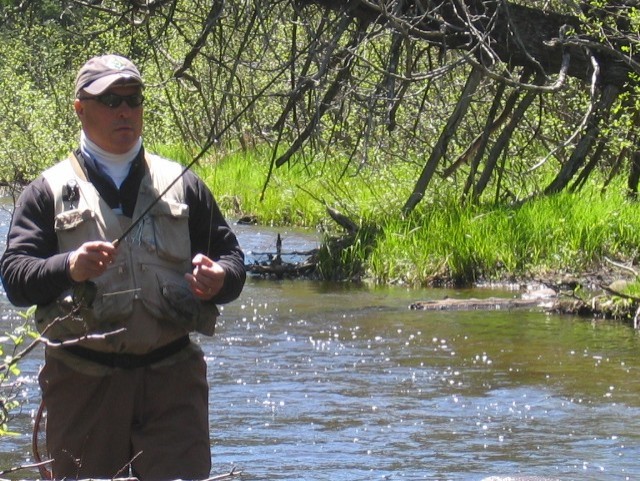
John Walters, Natural Resources Commissioner
(Indian River, MI)
Tell us about your background. What experiences growing up influenced your desire to pursue the role you have now?
I grew up in Clawson, MI, a small town in Metro Detroit. As a very young boy, my father and his hunting partner introduced my brother and me to the woods and bird hunting on the Mason Tract in Roscommon. We were also introduced to pan fishing in a variety of inland lakes across the state. As we got older, my brother and I were involved in Boy Scouts where we each earned our Eagle Scout Award. Our parents were very encouraging to explore, learn and ask questions about our natural resources. Equally important, they lead by example to get involved by volunteering in organizations and the community to effectuate a better place to live.
In the mid-1990’s, my brother-in-law introduced me to trout fishing, using spinner bait. In the late-1990’s, I was enamored by watching fly fishing shows on ESPN Outdoors. It was at that point, my wife and I soon took up fly fishing. We spent a lot of time at Gates Au Sable Lodge, when we were not on the river. I was introduced to Rusty Gates, the owner of Gates Lodge, and we developed a wonderful bond. One day, Rusty asked, “When are you going to give back to the places you love so much?” I replied, “Today.” Rusty asked, “What do you mean today?” I responded, “Today, I become a conservationist. I will come here to lean, ask questions, and listen.” With a smile on his face, Rusty said, “OK, I’ll see you tomorrow.” I was there the following day. It was Rusty’s mentorship that encouraged me to get involved in conservation.
I served on the following boards, committees and commissions:
- Natural Resources Commission
- President – Headwaters Chapter Trout Unlimited
- Chairman – Pigeon River Country Advisory Council
- Chairman – Michigan Trout Unlimited
- Vice Chairman – Anglers of the Au Sable
- Member – MDARD Rural Development Fund Board
- LARA – ORR Natural Resources Advisory Council
- Office of the Great Lakes – Water & Land Strategies
- Jordan & Pigeon Rivers – Natural River Zoning Boards
- Northern Lake Huron Advisory Committee
- DNR Forest Access Committee
- Elk Management Advisory Team
The exposure I received from being an active participant and leader on the many boards, committees and commissions has been life altering.
What is your role in wildlife management policy and regulations?
As a Natural Resources Commissioner, I collaborate with the other six Commissioners to make regulation decisions and advise the DNR on management issues. I currently serve as Chairman of the Wildlife Committee for the NRC. The Wildlife Committee discusses various topics of wildlife management and regulation prior to the subject coming before the entire NRC.
What is something you wish hunters understood about your role?
The Natural Resources Commission seeks biological information from the Fisheries and Wildlife Biologists within the DNR, outside university professors and professional biologists in the private sector to better understand issues, interpret data, and find truth. We discuss various topics, issues and regulations with the public.
The Natural Resources Commission has exclusive authority to:
- Select Game Species
- Determine “Method of Take”
- Decide “Seasons of Harvest”
- Decide size and bag limits
- Advise the Department of Natural Resources on management issues
All Commissioners are appointed by the Governor and serve voluntarily.
I clearly understand the decisions the NRC makes are going to make some very happy and are going to make others very unhappy. So, I focus on doing what is best for the resource, first. If we all strive for a healthy fish and wildlife population, we will all have more enjoyment in the water or woods.
What keeps you motivated during challenging times?
I am very self-motivated. I try not to get too emotional about issues. I have an ability to problem-solve to find positive outcomes to complex issues. I stay persistent on matters that need change and discuss these changes with future Commissions at a different time. If a regulation doesn’t go the way I was hoping, I simply think, “It not necessarily over, it’s just not right now.”
Can you share a time when you went above and beyond because you cared deeply about the outcome?
In January 2018, at my first NRC meeting as a commissioner. We were being asked by the DNR to consider passing the “Common Merganser Policy.” This policy was to kill Common Mergansers or trap and transport them to another waterbody. This was all being conducted to prevent swimmer’s itch. This occurs when a parasite is transported to a lakeshore, then the parasite thrives in waters with high concentration of phosphorus or fecal materials. This means in areas of the lake where property owners are fertilizing the grass and run-off enter the lake, or they have a failing septic system. I needed to understand “Why.” So, I called a Lake Superior State University professor, specializing in Parasitology. I asked the professor how this occurs. He stated all birds carry the parasite, not just the Common Merganser. I asked why Common Mergansers are being targeted. He stated he did not know, perhaps because they taste like mud. So, if all birds carry the parasite, and they thrive in high concentrations of phosphorus and fecal material, trapping and relocating creates problems for other lakeshore owners; then this is a human problem on the specific lakes where swimmer’s itch is present. I contacted the DNR Staffer who acts as liaison between DNR & NRC to inform him that I would be voting NO.
What part of your role gives you the greatest sense of accomplishment?
I thoroughly enjoy going through the process of regulation change. I get an enormous sense of accomplishment when making difficult decisions to improve the quality and health of our fish and wildlife. We recognize regulation changes will affect hunters or anglers, I first identify what effect the regulation change will have on the resource. I embrace discussions on regulation changes with those interested in the subject. I find the more difficult the issue and the decisions, the more I appreciate accomplishing positive outcomes.
What kind of impact do you hope to make in Michigan?
I have high expectations to improve the quality and health of fish and wildlife in Michigan. Being a strong leader and voice, while making difficult regulatory decisions to accomplish a healthy resource is the greatest impact I can have while serving on the NRC.
There are many issues facing Whitetail Deer in Michigan, and these issues are dramatically different in various regions of the state. I believe we can attain a healthy deer herd in Michigan in the next five years. Based on quality and achievable goals with strong regulation changes we should see significant improvement, a better product on the landscape will emerge, and more hunters will want to come to Michigan to hunt quality Whitetail Deer. The impacts I expect the NRC to make are to identify what types of changes necessary by region, both in terms of regulations and hunter attitude, develop a regulatory plan for adaptive management, and pass the necessary regulatory changes by region. By implementing this plan into action, I expect hunters to change how they view Whitetail Deer hunting in Michigan.
What excites you about the future of wildlife management in Michigan?
I believe the regulation changes the NRC recently made on Coyotes, the decisions the NRC is about to make to eliminate the Nuisance Animal List on Game Species and creating a “Management Season,” and the 2026 Whitetail Deer regulation changes the NRC is considering, all excite me most about the future of Wildlife Management.
How do you stay engaged and continue learning in your field?
First, what drives my motivation is being a part of the solution. I am more than a hunter and angler; I am a conservationist who is obligated to make a difference with our Natural Resources. This is more than a passion; it has become a thread of my being. Being a conservationist is a big part of who I am. So, staying engaged comes easy to me. Consequently, continuing to learn about new ideas, new thoughts, new techniques, and understanding what others have tried successfully or failure, drives me to be a better commissioner.
What advice do you have for hunters who are looking to engage in managing our wildlife?
The best advise I can offer is what Rusty Gates challenged me with, “When are you going to give back to the places you love so much?”
Get involved, in more than wildlife management, become an advocate, a leader, a conservationist.
Be a “Doer,” not a complainer. Find solutions, even when you don’t think a solution is available. Never give up on your beliefs.
Stand up for what is right, not necessarily what is popular.

Leave a Reply